



Sodium Chloride Cotransporter (NCC)
Sodium Chloride Cotransporter
Sodium chloride cotransporter (NCC), encoded by the SLC12A3 gene, is a member of the electroneutral cation–chloride cotransporter (CCC) family. NCC mediates Na+ and Cl− cotransport following a 1:1 stoichiometry.
NCC is a homodimer formed by two subunits. NCC-mediated ion transport is activated through the phosphorylation of conserved threonine and serine residues in the cytosolic N-terminal domain of the transporter.
Sodium chloride cotransporter (NCC) mediates the reabsorption of ultrafiltered sodium in the renal distal convoluted tubule that is essential for electrolyte balance, blood pressure regulation, and the pathophysiology of hypertension[1].
NCC is a homodimer formed by two subunits. NCC-mediated ion transport is activated through the phosphorylation of conserved threonine and serine residues in the cytosolic N-terminal domain of the transporter.
Sodium chloride cotransporter (NCC) mediates the reabsorption of ultrafiltered sodium in the renal distal convoluted tubule that is essential for electrolyte balance, blood pressure regulation, and the pathophysiology of hypertension[1].
All Product Categories
-
Sodium Chloride Cotransporter (NCC) Verwandte Produkte (4)
Verwandte Produkte (4)

-
Chlorthalidone
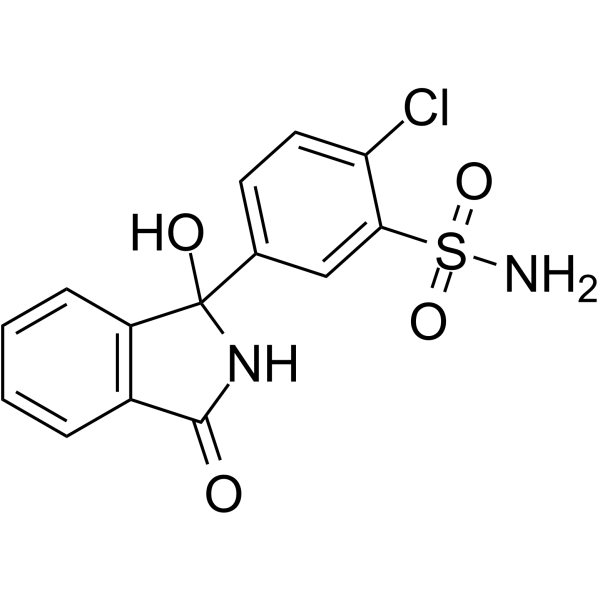 0 ImagesChlorthalidone is a thiazide-like diuretic used to treat hypertension.
-
Clopamide
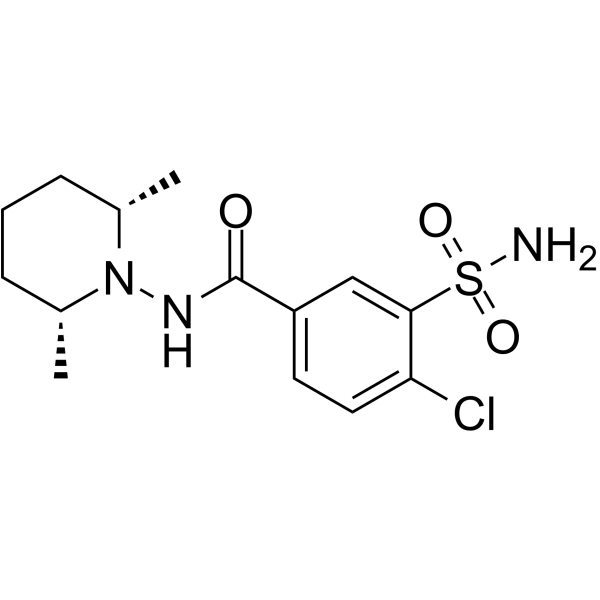 0 ImagesClopamide is an orally active thiazide-like diuretic agent that inhibits the sodium-coupled chloride cotransporter SLC12A3. Clopamide has the potential for hypertension and cardiac failure research.

-
Epitizide
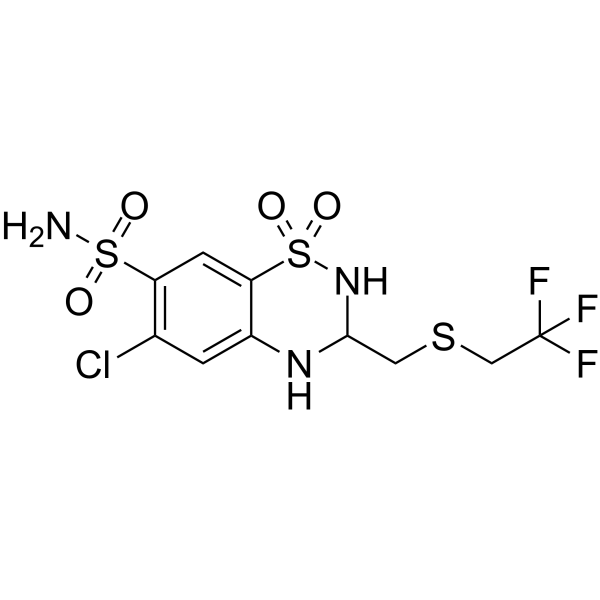 0 ImagesEpitizide, a benzothiadiazine, commonly found in combination Triamterene (HY-B0575), is used to produce diuresis.



